


Workshop on "Design Thinking" for BBA & BCA Students under the aegis of the Institution's Innovation Council (IIC), Institute of Technology and Science, Mohan Nagar, Ghaziabad
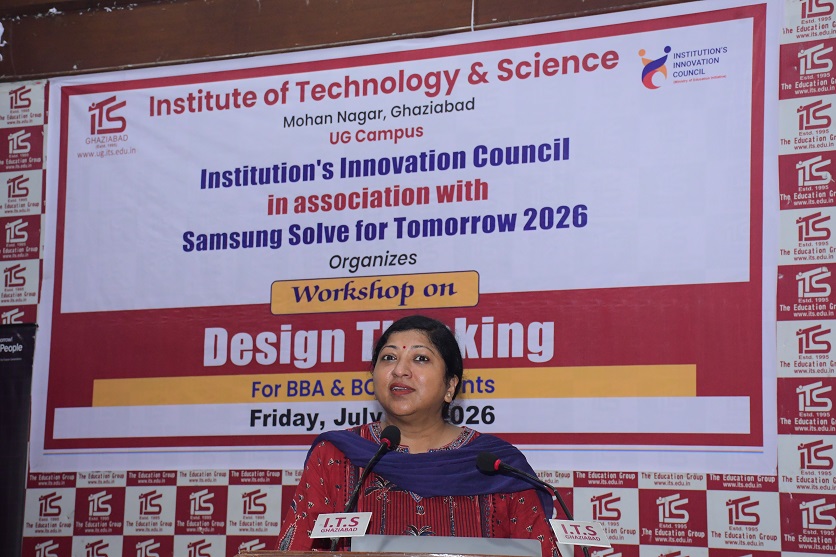
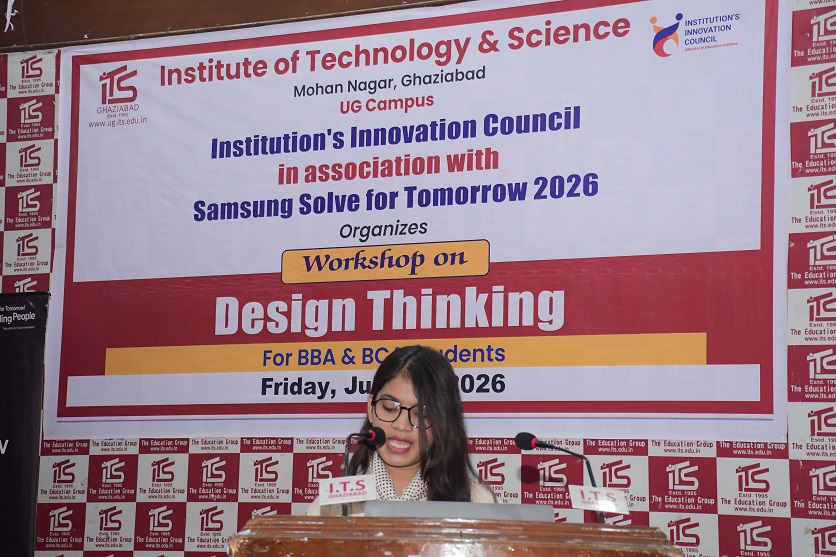
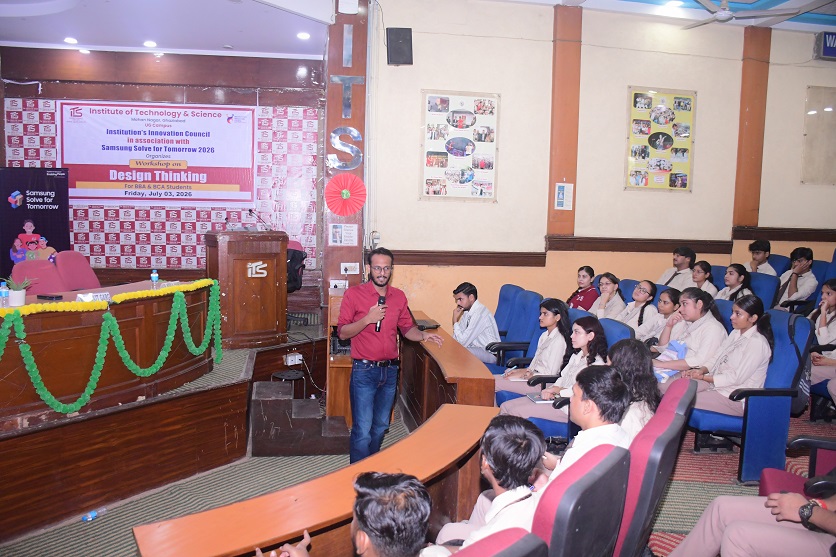
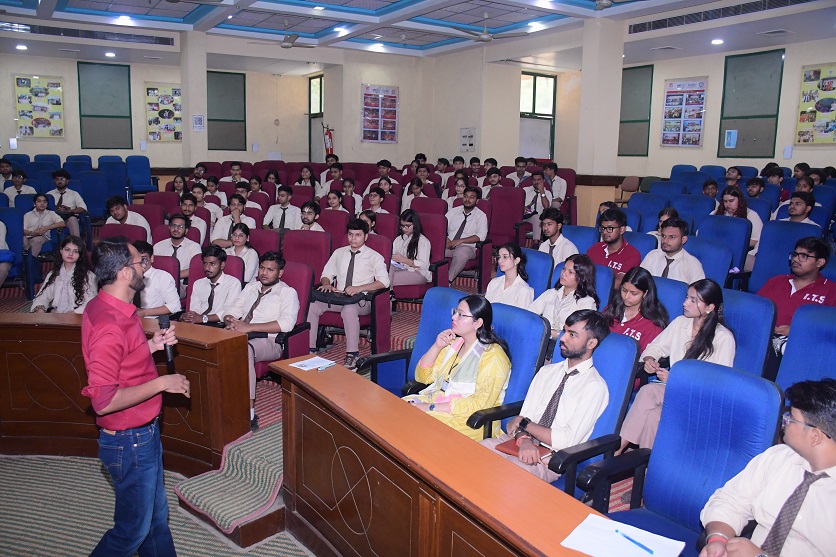
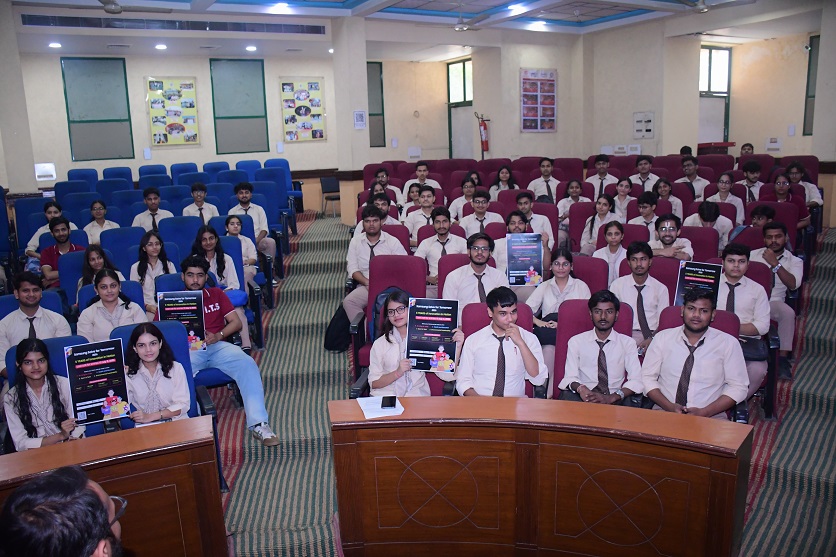
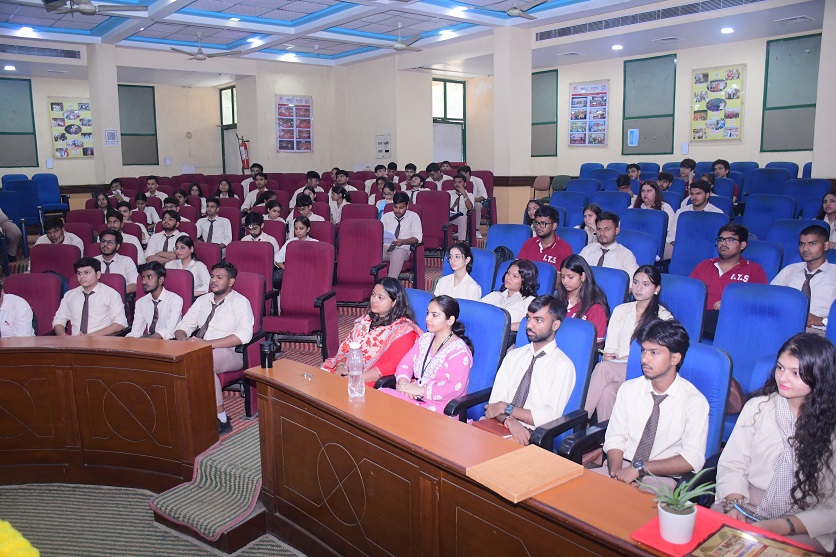
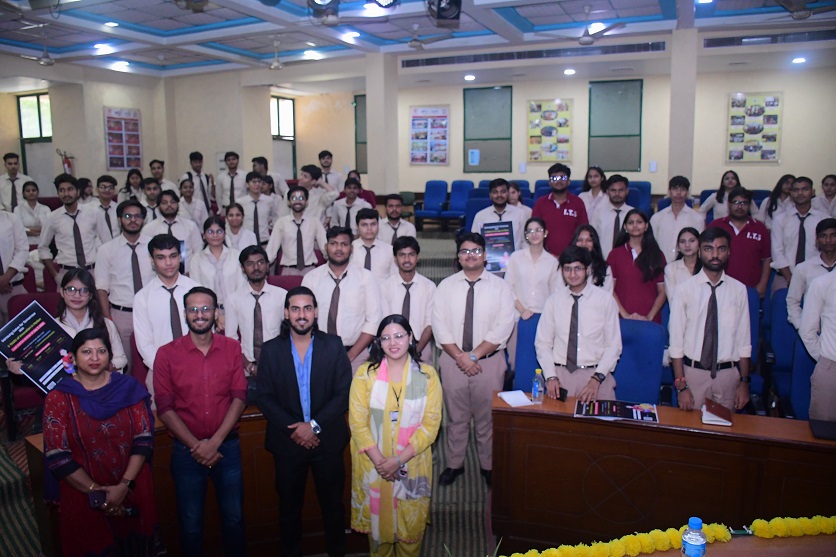
03-07-2026Institute of Technology and Science, Mohan Nagar, UG Campus under the aegis of the Research and Development Cell – Institution& Innovation Council (IIC), successfully organized a Design Thinking Workshop for BBA and BCA students on 3 rd July 2026 under the & Solve for Tomorrow 2026& initiative. The programme commenced with a warm welcome and an inspiring address by Dr. Vidushi Singh, Dean Academics & HOD BCA who emphasized the importance of innovation, creativity, and design-led thinking in preparing students to address contemporary societal and industrial challenges. This was followed by an address from Dr. Neerja Anand , Convener, Institution's Innovation Council (IIC), who encouraged students to actively participate in innovation-driven initiatives The workshop was conducted by Mr. Ankit Garg, Founder & CEO – Eemu Masale, Start- up Mentor, Strategic Advisor – Think Startup, and Member – IIT Delhi Angels. During the interactive session he introduced students to the principles and methodology of Design Thinking, focusing on the five stages; Empathize, Define, Ideate, Prototype, and Test. Through engaging discussions, practical examples, and collaborative activities, students were encouraged to identify real-world challenges and develop innovative, user-centric solutions in the areas of AI for India, Health & Education, Sports & Technology, and Environmental Sustainability. The session witnessed enthusiastic participation from students of the BBA and BCA programmes. Students actively engaged in brainstorming exercises, group discussions, and idea-generation activities, demonstrating creativity, teamwork, and analytical thinking. They were also introduced to the Solve for Tomorrow 2026 innovation challenge and were guided on the process of developing and submitting impactful ideas through the official platform. The workshop successfully enhanced students&awareness of design-led innovation and entrepreneurial thinking while motivating them to become solution-oriented innovators capable of creating meaningful social impact. The programme concluded with a Vote of Thanks delivered by Dr. Simra Mujahid, who expressed sincere gratitude to the distinguished resource person, the dignitaries, the organizing team, faculty members, and the enthusiastic student participants for contributing to the success of the workshop.
.JPG)